
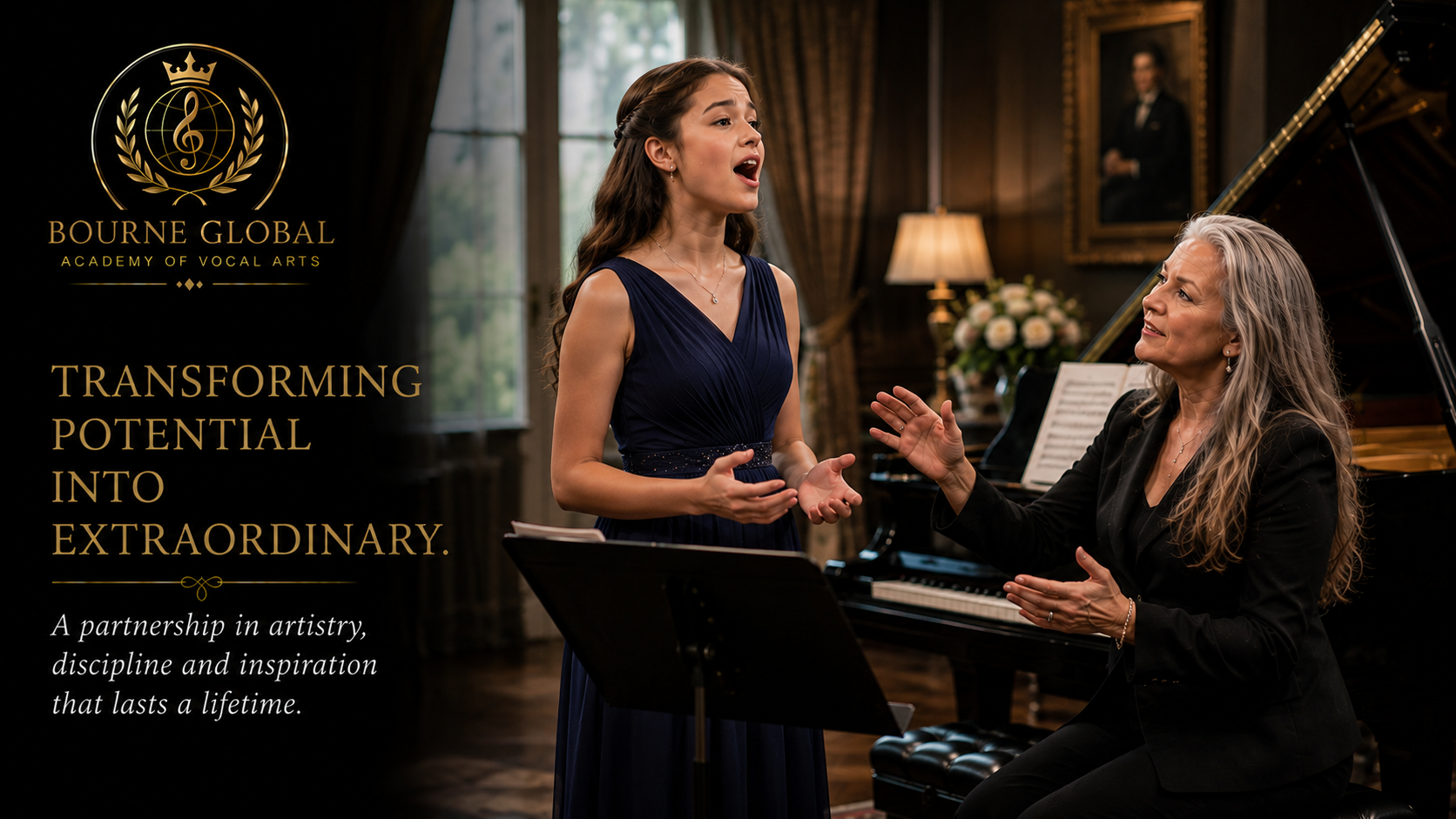
Protect the Young Voice. Expand the Young Musician.
A child may have a beautiful voice, quick musical instincts, unusual focus, expressive imagination or simply a deep love of singing. Potential at this age should be protected, understood and given excellent foundations—not rushed.
We approach the young singer as a developing person and musician, not as a miniature adult performer.
Give Them Time to Build What Choir Rehearsal Introduces.
Children can develop healthy vocal habits, breath coordination, clear vowels and consonants, pitch matching, tonal memory, rhythm, solfege or another appropriate reading system, beginning sight-singing, ear training, musical vocabulary, score habits, listening and intelligent practice.
Pitch becomes a process: hear it internally, sing it, listen, compare, adjust, try again and stabilize. That is the beginning of musical independence—and it comes back into the choir room.
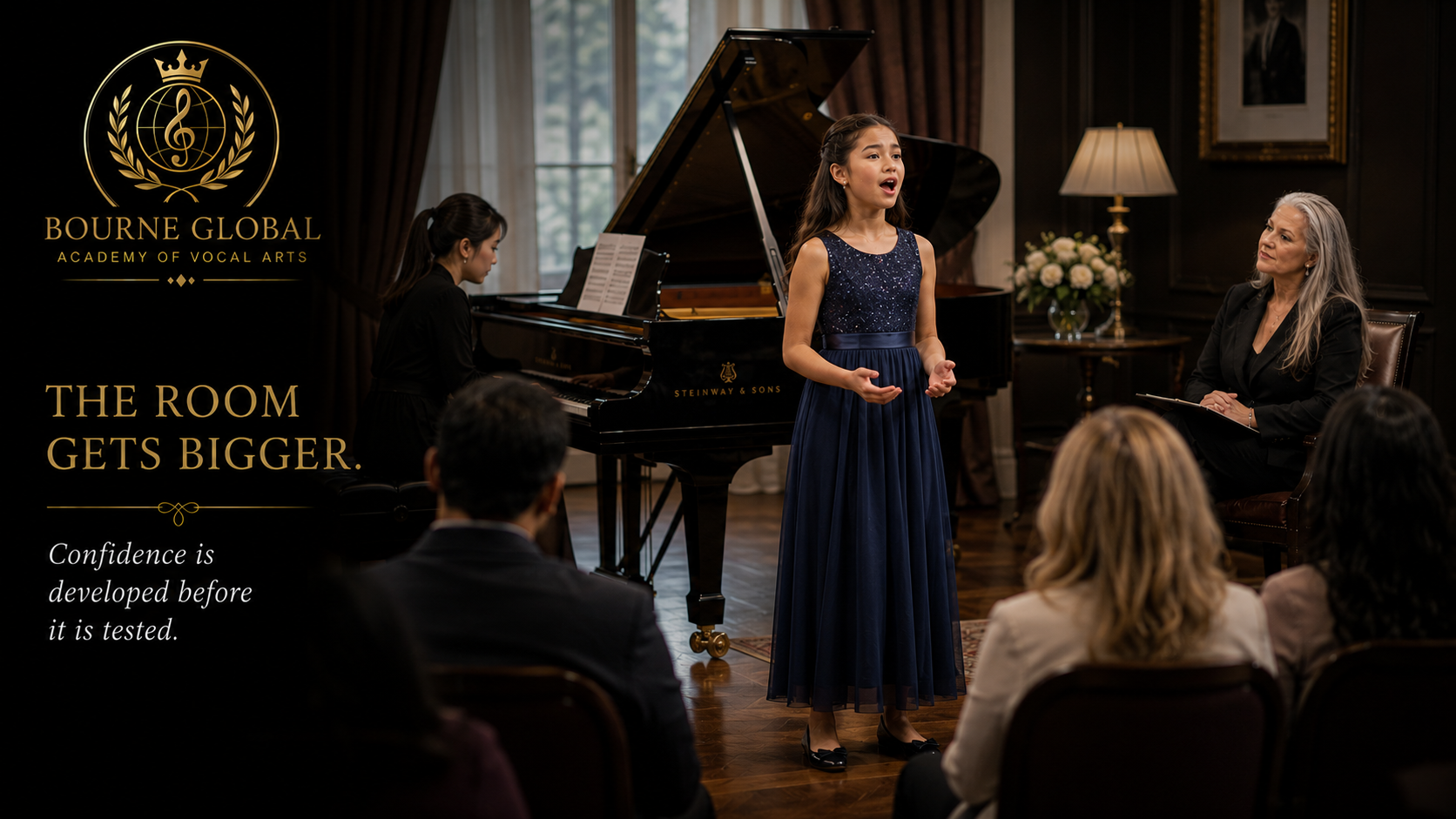
Joy Is Part of the Pedagogy.
Serious training should not drain wonder out of a child. Children learn through curiosity, repetition, stories, movement, listening, modelling, challenge and success. The standard can be high while the environment remains warm, encouraging and age-appropriate.
Parents can receive practical guidance on practice, motivation and healthy expectations so home remains supportive rather than becoming another rehearsal room.
What the Conductor Gets Back.
A child who arrives more prepared, listens more accurately, reads more confidently, understands musical language, responds more quickly, takes correction without fear, begins to self-correct and communicates text with greater intention.
Better-developed young musicians help create stronger children’s choirs.
Explore a Children’s Choir PartnershipYoung Artist Nomination™